
Our story
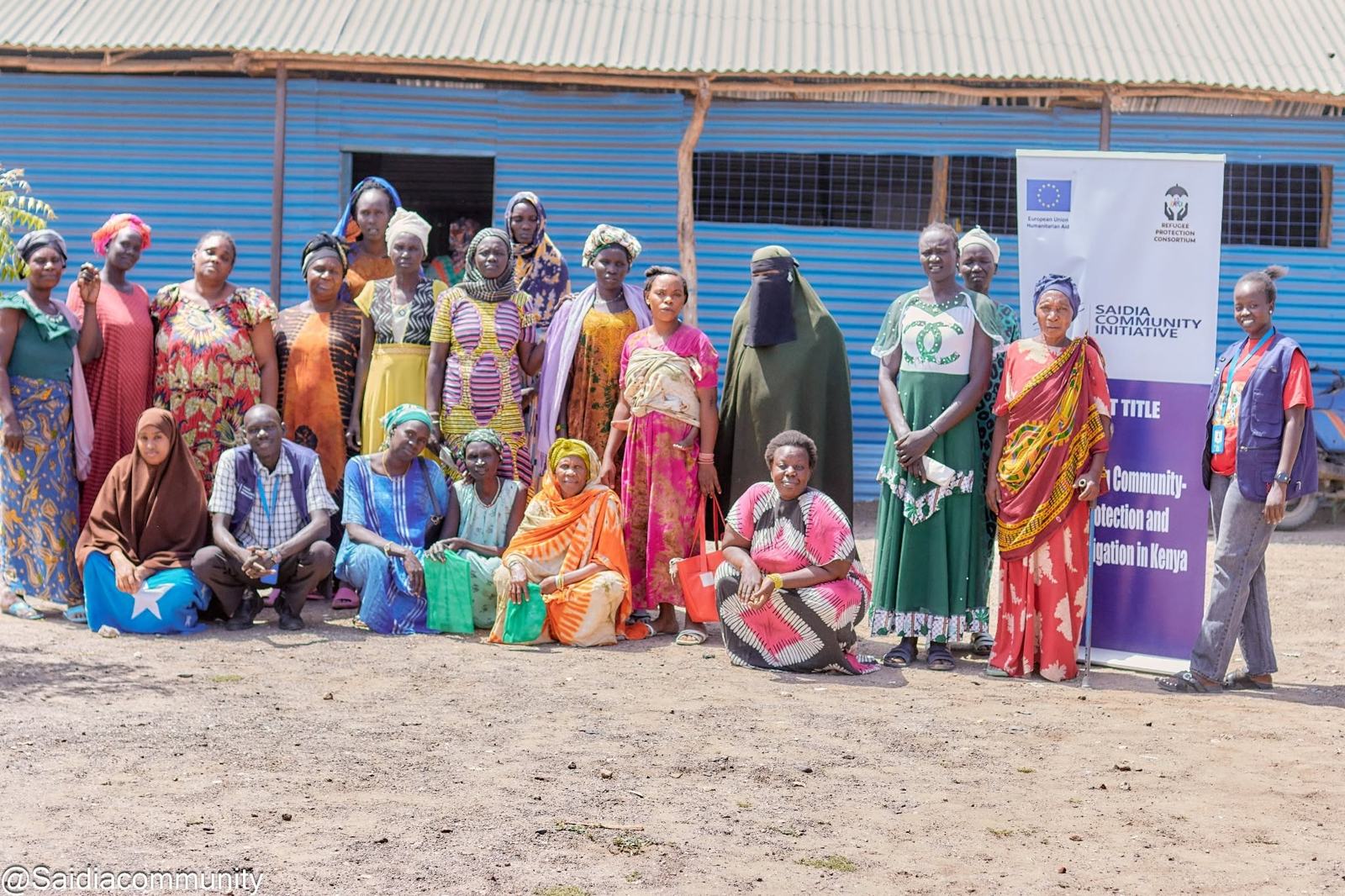
Founded in June 2022, Saidia Community Initiative (SCI) is a women-led Community-Based Organization (CBO) based in Kakuma Refugee Camp, dedicated to advancing the rights, dignity and resilience of refugee and host community women and youth.
SCI was established by a passionate young woman from the refugee and host communities in response to the growing crisis of gender-based violence (GBV), limited access to education and widespread economic vulnerability affecting women and girls in Kakuma.
Since its inception, SCI has become a trusted grassroots organization driving community-led change through integrated programmes in GBV prevention and response, sexual and reproductive health and rights (SRHR), education access, women’s empowerment and sustainable livelihoods.
Our mission
To empower women and youth through inclusive programs in protection, education, and livelihoods.
Our vision
A safe, empowered, and inclusive society where refugee and host community women and youth live free from violence, access equal opportunities, and achieve their full potential with dignity and resilience.
Our core values
Integrity
Inclusion
Accountability
Respect
Innovation
Empowerment
The challenges we respond to
- Gender-based violence: women and girls face domestic violence, sexual exploitation, child marriage and harmful practices, often without safe reporting or survivor-centred services.
- Limited SRHR information and services: cultural taboos and misinformation contribute to teenage pregnancy, early marriage and school dropout among girls.
- Youth unemployment and economic vulnerability: limited skills, capital and market access push families toward negative coping mechanisms.
- Mental health and psychosocial needs: years of displacement and trauma leave many women and youth with stress and distress, while support remains limited.
Our approach
We place women and girls at the centre of our work. Communities are partners, not just beneficiaries: they help define problems, generate evidence, design solutions and measure impact.
